
Fall River Resident Records
Each record answers a narrow question. The Fall River Assessor search can connect an assessed owner with a parcel, situs address, and mailing address, although an ownership update can lag a new transfer. The Massachusetts voter rules describe public local-list fields, but a registration match is not proof that a person is physically present today. Courts, vital custodians, and credential boards have their own definitions and access limits. A careful person search builds agreement across sources instead of treating a single result as a complete profile.
| Record | What it can confirm | Fall River route | Access boundary |
|---|---|---|---|
| Assessor parcel | Assessed owner, parcel, situs and mailing address | Patriot Properties | Public search; a printed card is $1 |
| Recorded deed | Transfer parties, date and legal description | Fall River Registry land portal | Free search and watermarked view; downloads cost $1 per page |
| Voter record | Registration name, address, party and status | Massachusetts Elections or a municipal request | Protected and confidential fields are withheld |
| Court docket | Named party, case event and court location | MassCourts and the relevant clerk | Portal is an aid; sealed and impounded material stays restricted |
| Vital or probate record | Life event, estate or court-file lead | City Clerk, RVRS, Probate and Family Court | Age, relationship and court restrictions apply |
| License or entity filing | Public credential or formal affiliation | Massachusetts license and corporation routes | Business and credential addresses are not home proof |
Use an address question to begin with the assessor and then the Registry. For a court question, begin with the state docket portal and ask the clerk for the official file route. A life-event question belongs with the City Clerk, RVRS, Probate court, Archives, or the library indexes, depending on its age. That division makes a Fall River name search more accurate and more respectful of record limits.
Fall River Court Lookup Fields
MassCourts eServices is the practical statewide start for public state-case research. Select a court department and division, then use the available location control to narrow the result. The portal supports name, case type, case number, and ticket or citation routes. The court guide says a civil name search uses at least two last-name characters and at least one first-name character when entered. Case-number searches require the exact, case-sensitive format, including spaces and leading zeroes. A case-type date window may not exceed one month.
The official Massachusetts docket-search instructions explain that a web result may be incomplete and is not the official record. A public terminal at a Massachusetts courthouse or Registry site may show more than the web version. Fall River District Court, Bristol County Superior Court in Fall River, and Fall River Probate and Family Court each hold different files. The clerk or register can identify the correct route for a paper or certified copy, while archived files can require a retrieval request.
See the MassCourts search screen before entering a name in the court index.
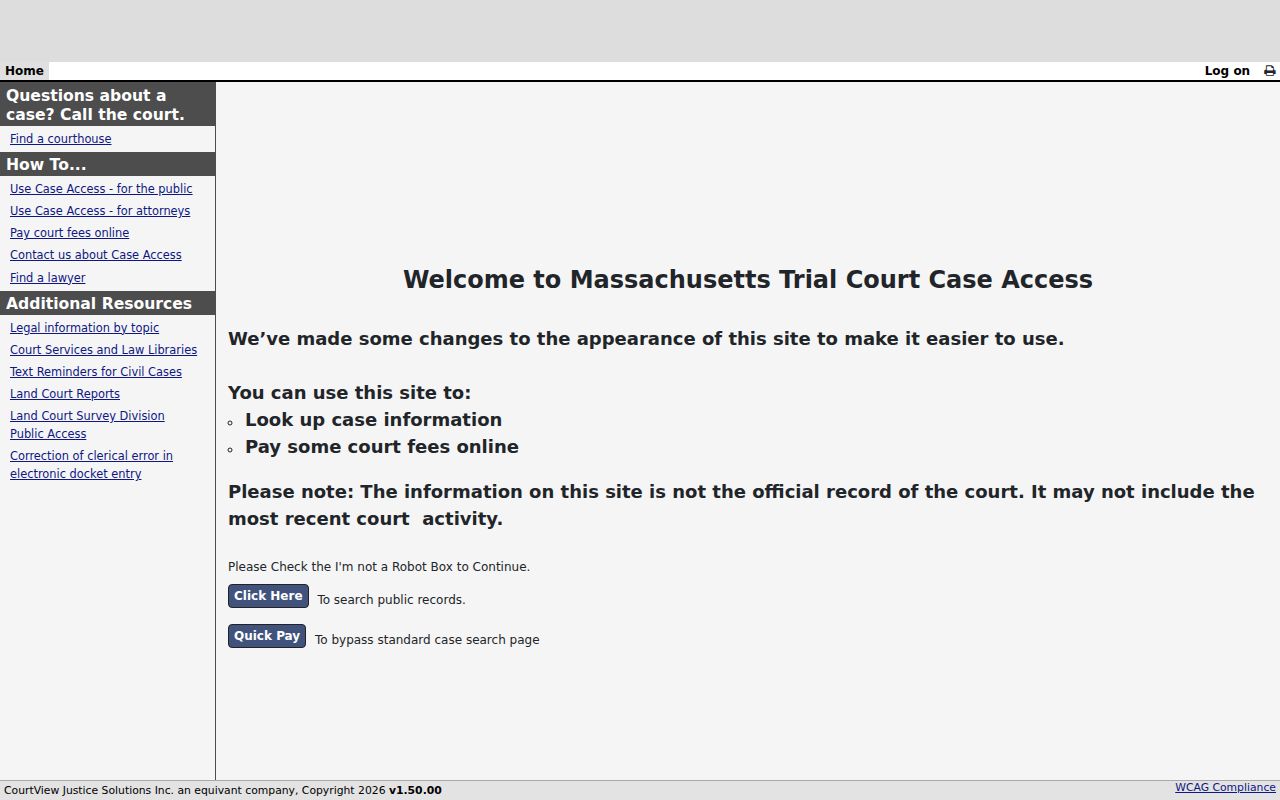
The department, division, and search-method choices show why a name alone does not settle identity or current residence.
The court-docket guide also describes the limitations that apply after a search.
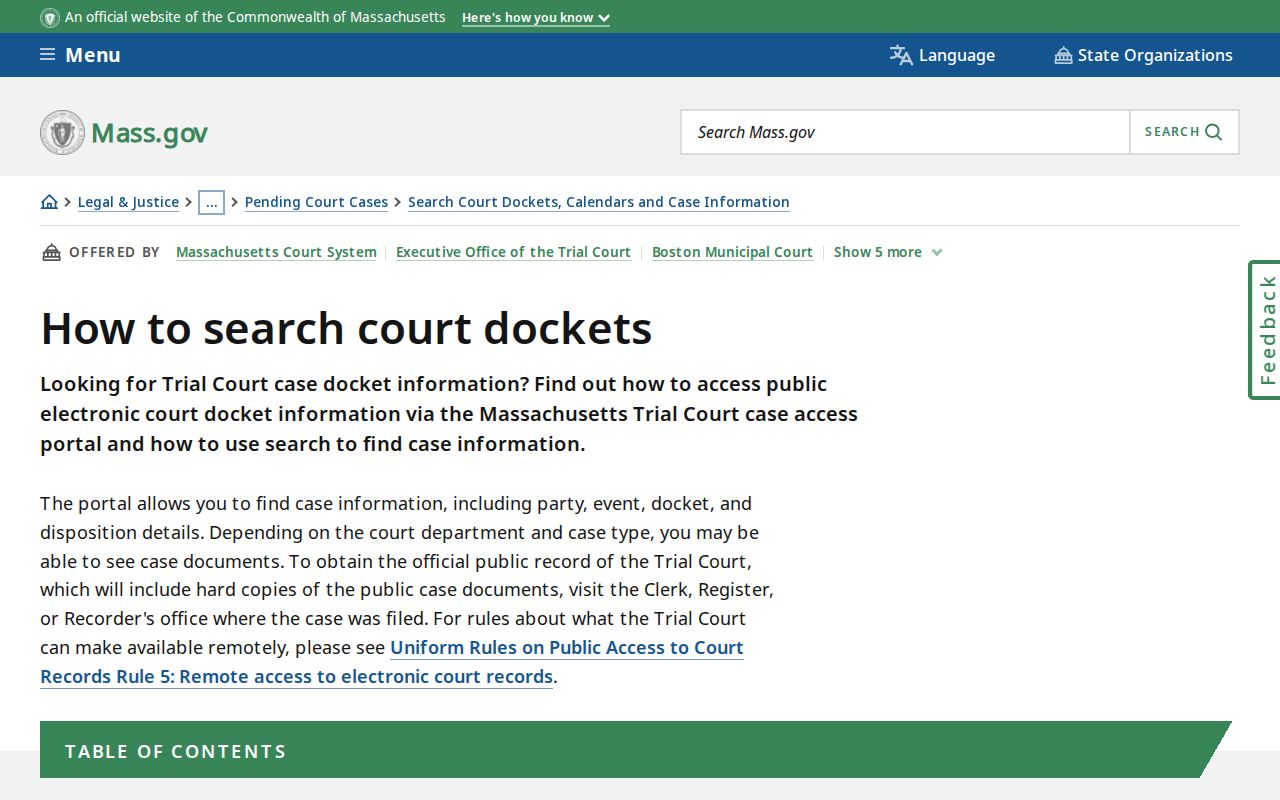
Use the docket as a lead to a court file, then confirm the person with an independent, dated record.
Fall River Resident Match Review
Similar names are common across assessor cards, deeds, directories, court captions, and licenses. Compare spelling variants, a middle initial, a dated address, a spouse or parent name where a public historical record shows it, an entity name, and a second date. A deed may use a trust, estate, corporation, or formal middle name. A directory may use initials. A court caption can contain a typo. None of those forms should be silently merged into one person without another match.
Keep the meaning of each match intact. An assessed owner may have a mailing address different from the physical parcel. A registered agent or license address may be a business location. A docket party may have appeared at an address only when a filing was made. If the goal becomes a full address-by-address record trail, the Fall River street directory supplies the broader parcel workflow rather than extending this one-person check beyond its evidence.
Fall River Vital Lookup Paths
The Fall River City Clerk is the local route for certified birth, marriage, and death copies, including in-person, mail, online, amendment, and genealogical-search procedures. RVRS is the statewide alternate custodian. A local genealogy request is a search service, not a promise that a record exists. For older research, the Fall River Public Library holds local vital microfiche from 1803 to 1889 for selected materials, while Massachusetts Archives provides digital vital records for 1841 through 1935 and indexes through 1971.
Access depends on both record type and age. Massachusetts generally opens the public-record exception for birth and marriage records after 90 years and death records after 50 years. Newer certificates can require a relationship, legal authority, identification, or another qualifying route. Divorce is not an ordinary municipal vital certificate: the Probate and Family Court holds the court file, and a historic RVRS index is only a court and docket lead.
The state certificate-ordering route shows the statewide request choices and eligibility guidance.
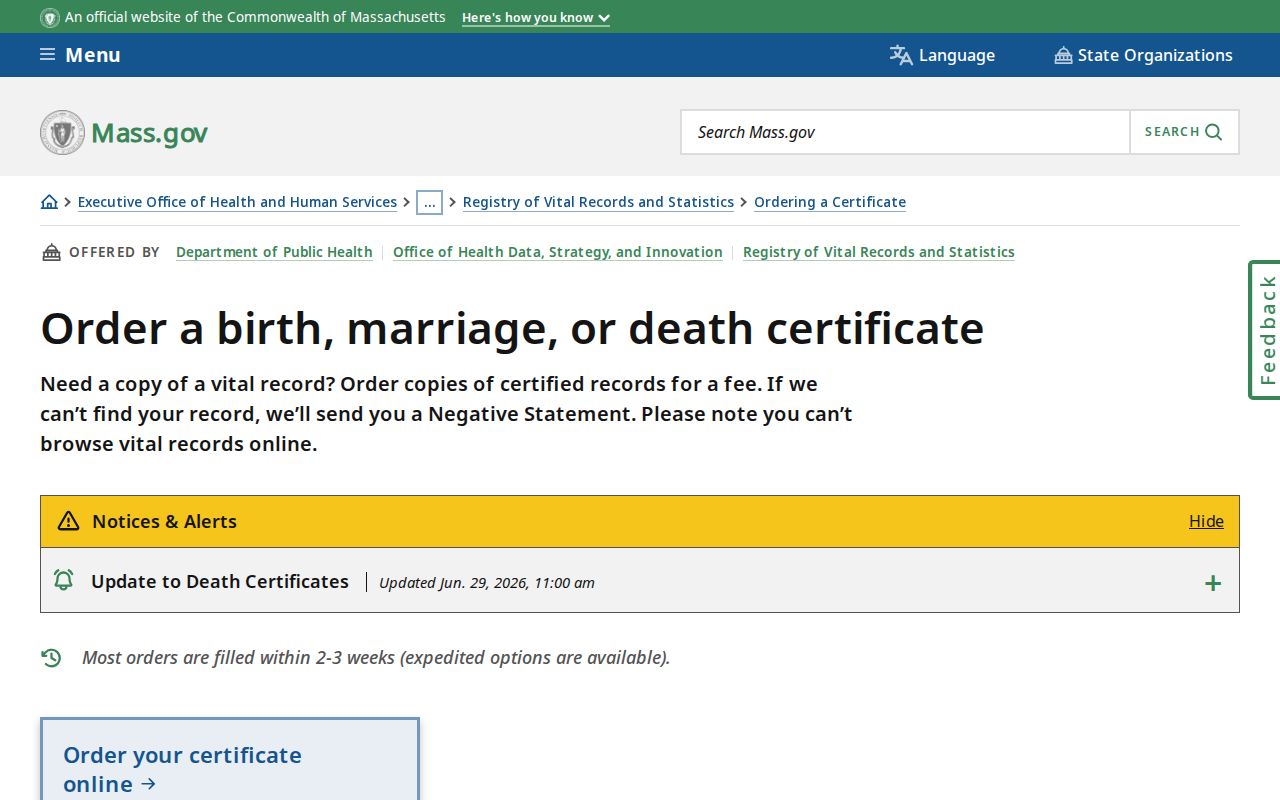
That workflow is for a properly eligible copy request, not for replacing the underlying Fall River record search with a general name match.
The City Clerk vital-record page identifies the local copy, mail, online, and genealogy routes.
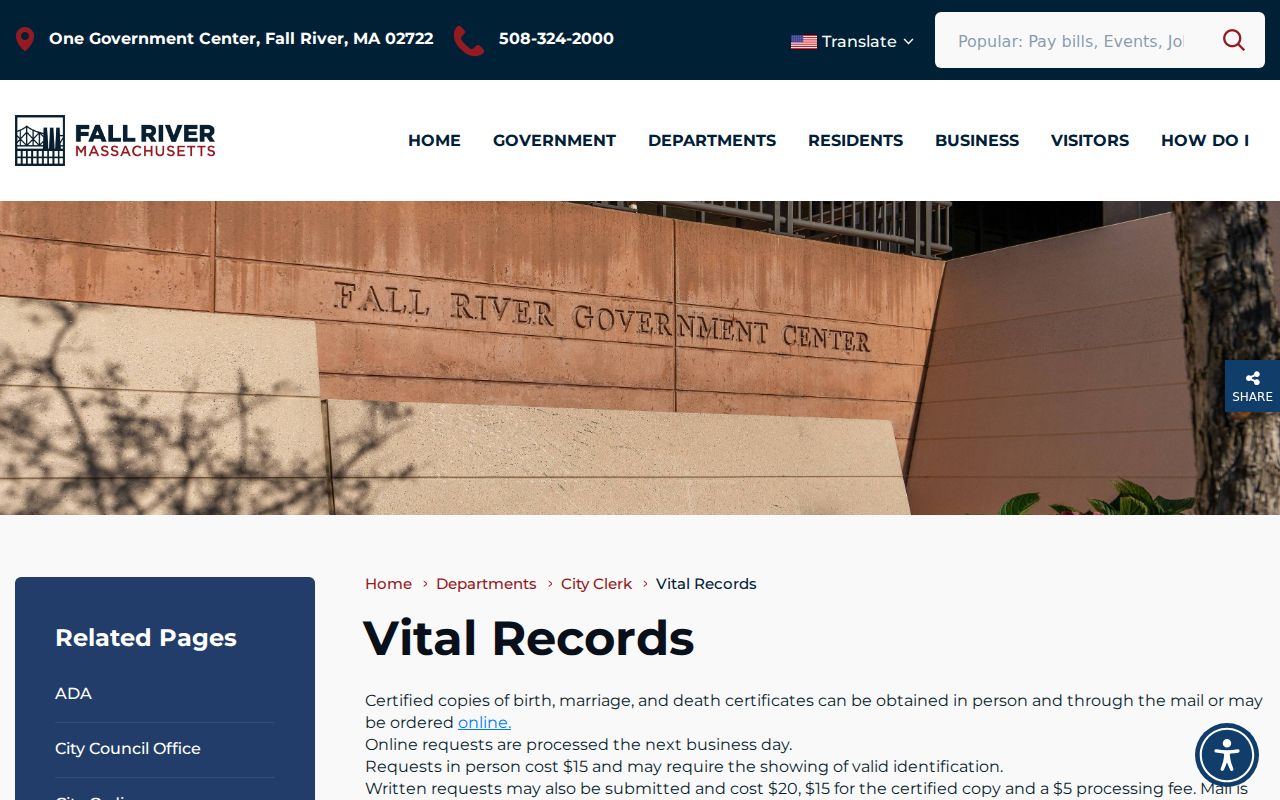
A certificate, an index entry, and a court decree are separate record objects with different custodians and rules.
Fall River License Lookup Checks
Public credential data can help distinguish people with the same name, but it does not establish a private residence. The Massachusetts occupational-license search offers Individual and Business tabs with fields for first name, middle or initial, last name, city, state, ZIP, board, license type, and license number. A result can show a name, credential number, type, and status. Board-specific details vary.
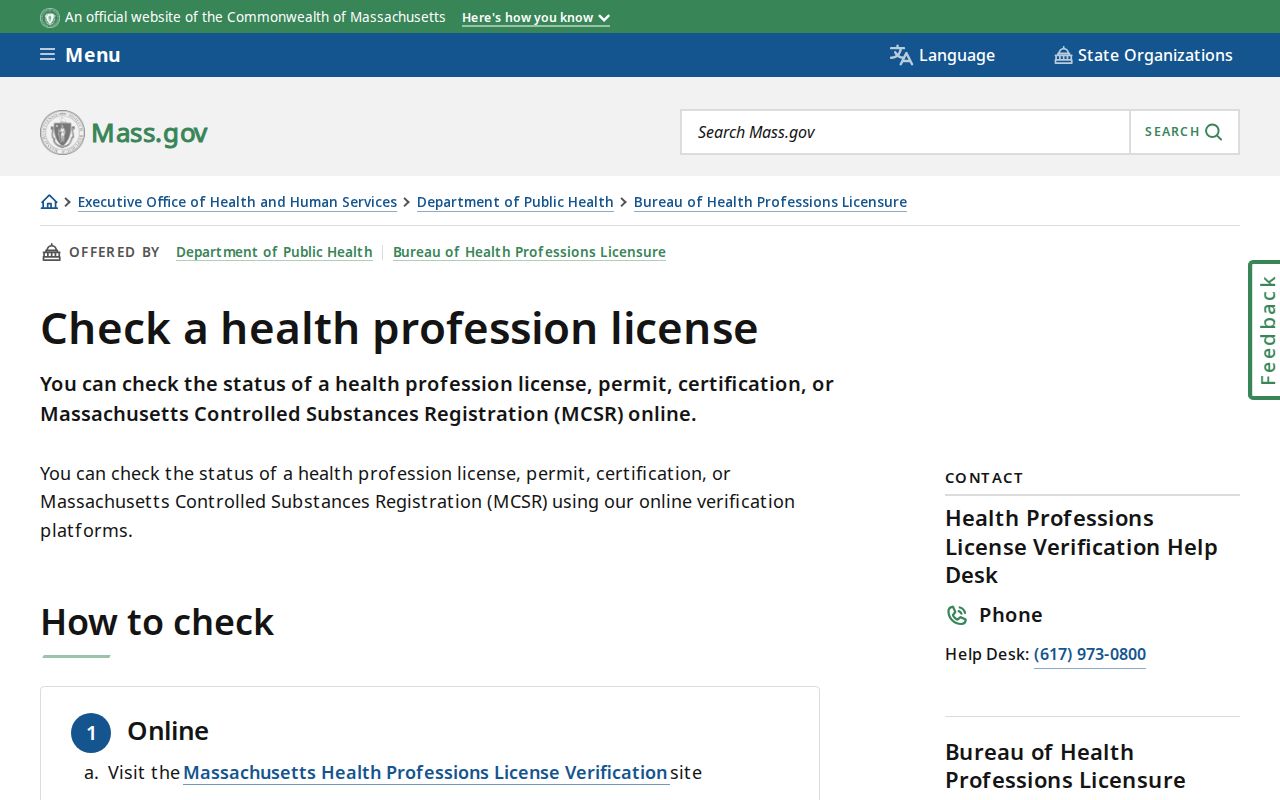
For a health credential, the Massachusetts health-profession search uses last name or license number without login. It provides public name, license, and status basics. Date of birth and Social Security number are confidential, and home, phone, employer, and education information can be restricted. The city Licensing Board and state Corporations Division can provide formal business-record leads, but registered, mailing, business, and personal addresses remain different categories.
The health-license search illustrates the limited public fields used to distinguish a named professional.
Use a credential result as an affiliation check, then verify any address question through the appropriate property or records custodian.
Verify a Fall River Resident
A verified result has a record trail, not just a shared name. Anchor the person to a date and address, compare the result with an independent record, then request the custodian’s official file only when it is needed. Do not publish or repeat protected fields simply because another source appears to contain them.
- Search the assessor by owner name, street and number, or parcel ID. Record the parcel, situs, mailing address, and assessment date separately.
- Check the Registry for a deed using the owner as grantee and compare the transfer date and legal description. A newer deed is the stronger transfer evidence if the assessment data has not caught up.
- Search MassCourts with the exact name and reasonable variants. Record the court and docket reference, not an assumption about the person’s present location.
- Use the applicable vital, probate, obituary, license, or entity source to test a second identity detail. Request a certified copy only from the custodian and only if eligible.
- Docket
- A court’s running case record, showing filed events and parties. It is not necessarily the official file or every document.
- Index and image
- An index helps locate a record; an image is the document view. Access, cost, and redaction rules can differ.
- Certified copy
- A copy issued or certified by the custodian for an official purpose, subject to that office’s eligibility and fee rules.
Fall River Resident Obituary Trail
When a person may be deceased, an obituary index and a probate docket can provide independent leads. The Fall River Public Library’s Herald News Obituary Index is a work in progress covering many years from the 1930s through the 2010s. Its yearly entries can show a name, maiden or spouse name, and publication date, but not the obituary text. The library accepts up to three free obituary requests by full name and date, while the full notice may be online or on microfilm.
Probate can identify an estate, executor, heir, filing date, or related recorded property transfer. It does not make every court document public, and impounded files remain unavailable. Pair an obituary or probate clue with a dated directory, vital record, or Registry instrument. That approach is particularly useful for family-history and heir research, without treating an obituary line as a current-address record.
Note: Public probate categories and obituary indexes can supply leads, but both require a separate source to verify identity and address.
Fall River Lookup Privacy Limits
Massachusetts protection is record specific. The Address Confidentiality Program uses a substitute address and mail forwarding for qualifying participants under M.G.L. c.9A and 950 CMR 130.00. Confidential voter registration under M.G.L. c.51 §51A can omit a name and address from ordinary public lists or substitute a number or address. Phone and email information, minors and pre-registrants, permanent-absentee status, and other protected voter fields are not public local-list data.
Sealed, impounded, juvenile, and adoption material remains restricted. RMV personal information is also constrained by federal DPPA rules. A public-records request under Massachusetts Public Records Law, M.G.L. c.66 §10 and c.4 §7(26), can seek an unindexed releasable record; it does not override an exemption or a confidentiality rule. Corrections belong with the relevant custodian: assessor, Registry, Elections, court clerk, City Clerk, or RVRS.
Fall River Records Request Route
When no public web search exists, identify the record keeper before making a request. Fall River’s published guidelines permit in-person, mail, fax, and email routes and generally use a ten-business-day response framework, subject to fees, exemptions, and lawful delays. Give the custodian a specific name, street or parcel, date range, record type, preferred format, and a clear description. A broad request for every record about a person is less likely to be efficient than a narrow request for an identified record series.
The Fall River Public Library and Fall River Historical Society are practical historical fallbacks. The library’s directories, newspapers, microfilm, local-vital material, and yearbooks can help where a modern portal stops. Court clerks, the Registry, and municipal offices remain the first stop for their own official records. Date a search result and retain its source, because the data can change.
Lawful Fall River Resident Search
Personal research, family history, reconnecting with a classmate through released historical material, estate questions, and checking a record with its custodian are legitimate reasons to follow a documented trail. Public status does not permit stalking, harassment, threats, impersonation, doxxing, repeated unwanted contact, or attempts to identify a protected person. Massachusetts criminal harassment law is M.G.L. c.265 §43A, with related protections in the stalking and harassment-prevention statutes.
Lawful use. Use named-result records only for personal, lawful research. Do not use any record to stalk, harass, intimidate, expose, or harm another person.